Charts are reproduced from the original Norwegian report.
THE PROPERTY MARKET
The transaction market
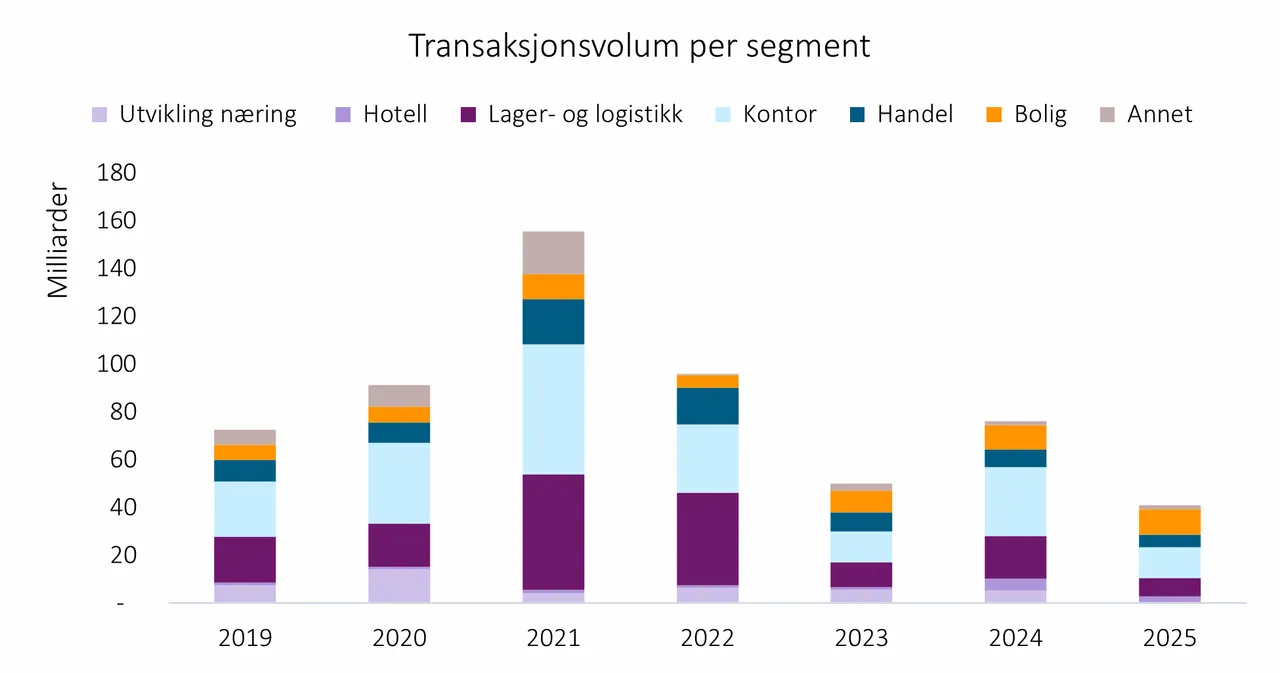
The transaction market in 2025 has been characterised by caution and changes in the distribution between segments. As of the beginning of September, transactions worth around NOK 40 bn have been registered, a decline of around 20 per cent compared with the same point last year. The optimism that characterised the start of the year has faded as a result of continued high interest rates and international turbulence.
The market is dominated by Norwegian players, who account for over 90 per cent of the volume. Foreign players are largely holding back. The low-yield segment is dominated by equity players owing to a continued low yield gap, while debt-financed players are mainly seeking value-add properties and properties with higher yields.
Residential has taken its place as one of the largest segments in the transaction market, driven by several major transactions, including KLP's acquisition of the Selvaag portfolio and Ulven Boligutleie. The office segment, which normally dominates the market, has developed more weakly recently. Nevertheless, interest in centrally located office property remains high. Volume for logistics property is lower than last year, but the segment is still perceived as attractive. In the retail segment the market is more fragmented, but total volume is on a par with last year.
Despite Norges Bank's rate cuts, an upward revision of the rate path has led the market to now price in higher interest rates. As a result, the rate cuts have so far had a limited effect on the transaction market. The market is moving more slowly than previously expected, but total transaction volume is nevertheless expected to end above last year's level. As developments are interest-rate sensitive, further movements in the rates market will be decisive for how strong the end of the year turns out to be.
The office market
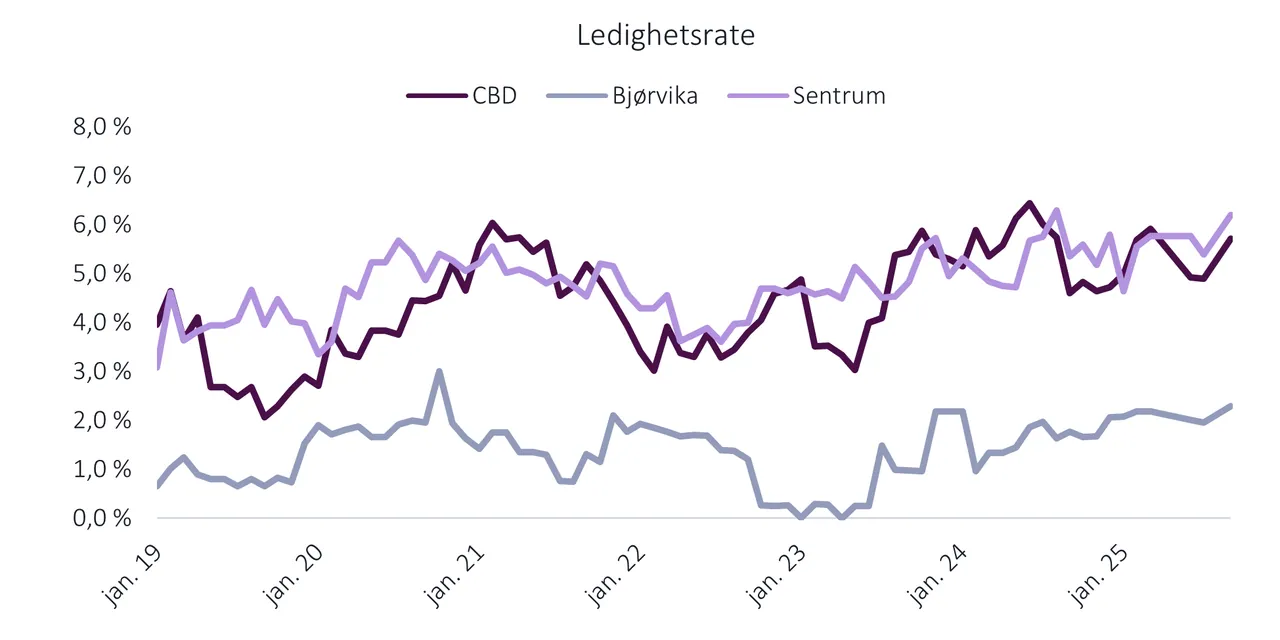
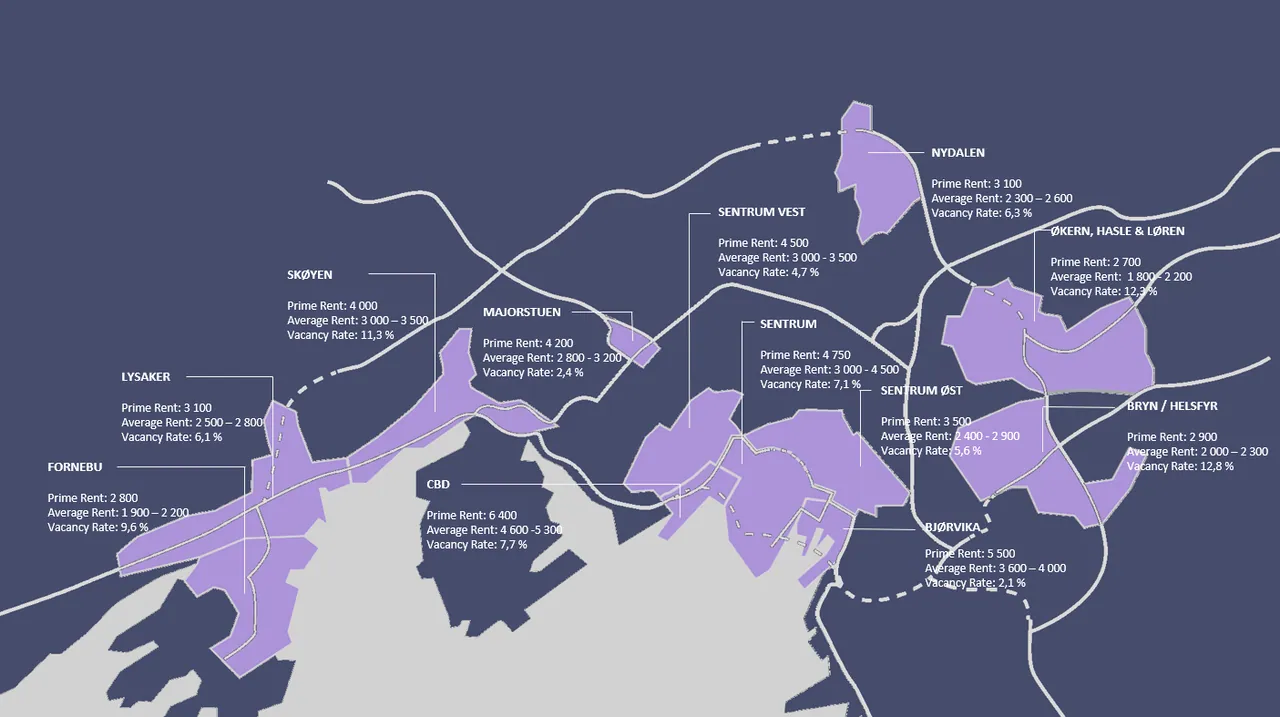
Office vacancy in Oslo has risen to just over 7 per cent, up by just over fifty basis points since the turn of the year. Vacancy remains lowest in the city centre and higher in office clusters outside the centre. New buildings such as Construction City have contributed to pushing vacancy up somewhat, but much of this space has now been absorbed. Low employment growth, for its part, contributes to higher vacancy.
The average rent in Oslo is now close to NOK 3,200/sq m, up more than 4 per cent from the first quarter. Prime rent in Vika-Aker Brygge has risen slightly to close to NOK 7,000/sq m, while the average rent is at a somewhat lower level. Rental growth is driven by low new supply in central areas and high construction and fit-out costs.
After the record years of 2022 and 2023, the letting market has slowed, and letting volumes are now around the historical average. Several tenants are making more efficient use of space, emphasising sustainability and holding off on new contracts. Around 165,000 sq m will be completed in 2025, which keeps vacancy at a moderate level. From 2026, fewer construction starts are expected, which may put pressure on rents in the most attractive areas.
The logistics market
The warehouse and logistics market has so far seen lower transaction activity than in previous years. Despite this, the segment is still perceived as attractive, and there is broad interest from both domestic and international players.
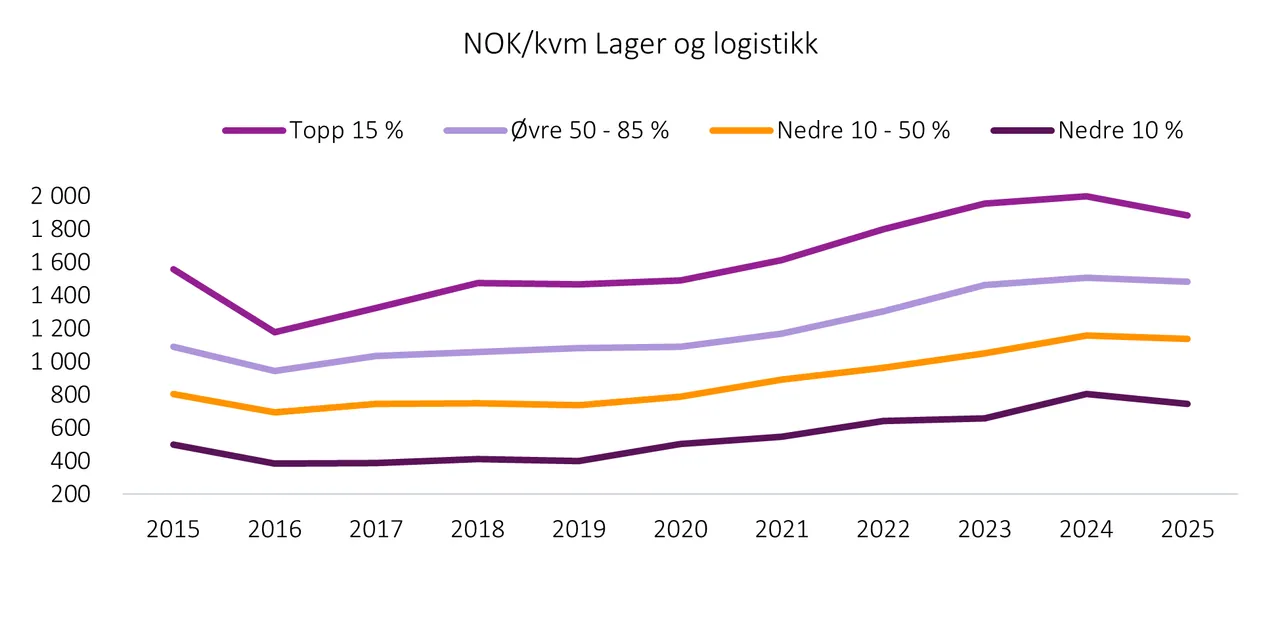
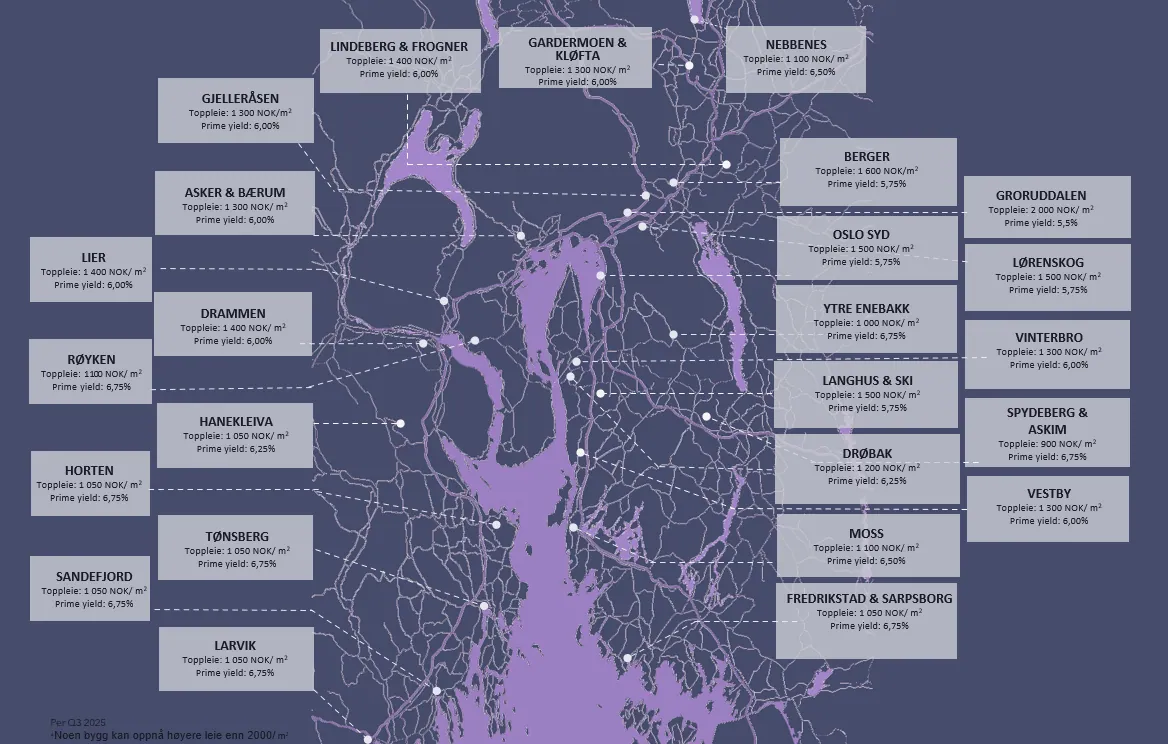
After several years of strong rental growth, growth has slowed. Prices have levelled off particularly in the prime segment, and rental growth has been sustained by other parts of the market. Prime logistics rents in the Oslo region are now at NOK 1,800–2,200/sq m. New construction activity remains low, and fewer available sites together with high construction and financing costs mean that new supply of space remains low.
Future developments will depend largely on the economic cycle. In the short term, weaker consumption may dampen demand, but low new construction volume combined with a growing need for warehouse and distribution solutions close to the city centre points to a continued robust market. Over time this may push rents up further, particularly in the most attractive areas such as Groruddalen and along the E6 and E18.
THE RETAIL MARKET
Shopping centres
Outside the largest cities the situation is more challenging. Here, shopping centres face strong competition from both e-commerce and discount chains. At the same time, the Norwegian shopping centre index shows general turnover growth so far this year, with particularly strong development in Østfold and Nordland.
The shopping centre segment has shown gradual improvement in 2025, with increased turnover and stronger activity compared with the previous year. The largest cities are experiencing the strongest growth, driven by increased purchasing power, which in turn leads to higher footfall and increased turnover. Several shopping centres report increased interest in service and food and beverage concepts, which strengthens their position as destinations rather than purely retail venues.
Retail trade
Shopping centres are likely to strengthen their position further, driven by groceries, discount and food and beverage concepts that provide stable customer flows. For city-centre retail the outlook is two-tiered. Prime locations are expected to maintain high rent levels and strong demand, while secondary locations must adapt to a market with fierce competition from e-commerce and declining footfall. Investor interest will continue to be concentrated on the most attractive properties, with low prime yields both on the high street and in the leading shopping centres.
Retail trade has seen more fragmented developments. Rate cuts and higher real wages have strengthened consumers' purchasing power and contributed to a good start to the year. At the same time, high housing costs and other fixed expenses place real constraints on consumption for many households.
E-commerce continues to gain market share, particularly in clothing, footwear and specialist goods, where competition from international online chains is strong. This is driving hybrid solutions that combine physical shops with digital platforms in order to meet customers' expectations of flexibility.
THE RESIDENTIAL MARKET
The transaction market
In 2025 the residential segment has taken its place as one of the largest segments in the transaction market. Several major portfolio acquisitions by institutional players and well-capitalised investor groups show that the sector is perceived as a relatively safe investment in an uncertain macroeconomic climate. The interest covers both existing apartment buildings and development sites, reflecting an underlying need for housing in the largest cities.
The rental market
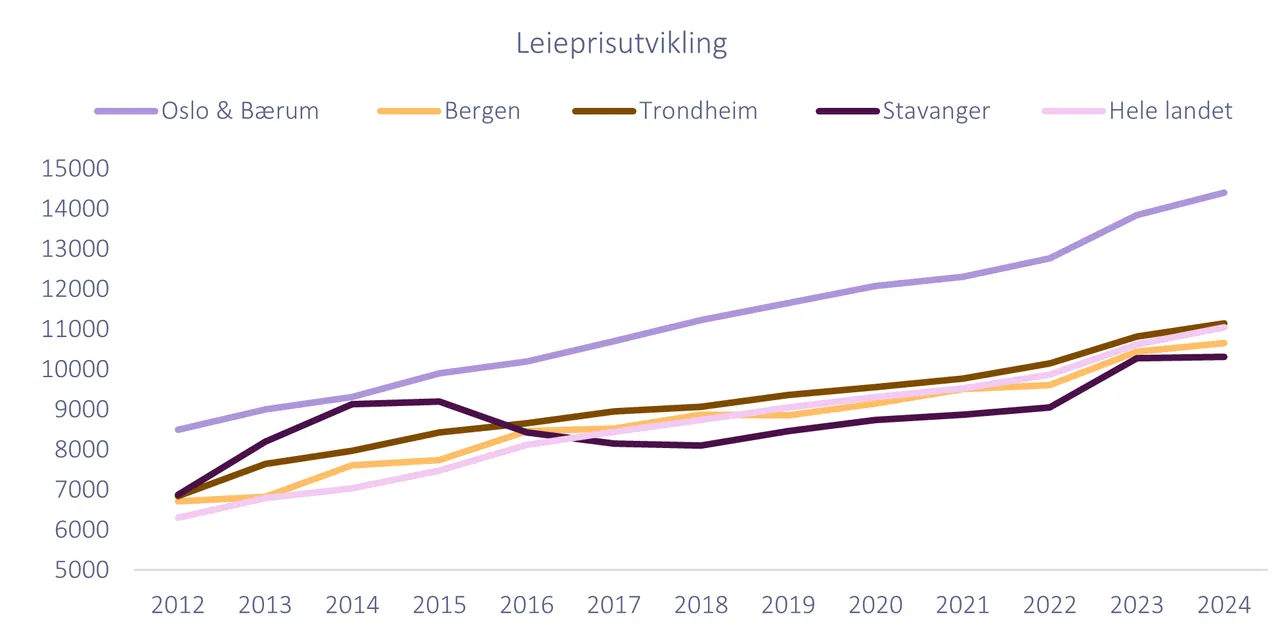
Changes in the tax regime have made residential letting less attractive. This, combined with the risk of regulatory changes relating to the use of the housing cooperative model, has reduced the supply of rental homes. In addition, low housebuilding, population growth and continued high interest rates are contributing to rising rents. The result is considerable pressure in the market, with very low vacancy.
House price developments
House prices have developed moderately in 2025 compared with previous years. Nevertheless, interest costs have made it more expensive to own than to rent, measured in housing costs. Lengthy zoning processes and high construction costs have contributed to low housebuilding, which, together with the rate cuts and high wage growth, could materialise in strong house price growth in the years ahead.
Macroeconomics
Internationally, geopolitical tensions and changes in trade policy are helping to dampen global growth. A number of countries have, however, concluded new trade agreements with the USA, which helps reduce uncertainty. For Norway's most important trading partners, weaker activity is expected in 2025, before it gradually picks up towards 2028.
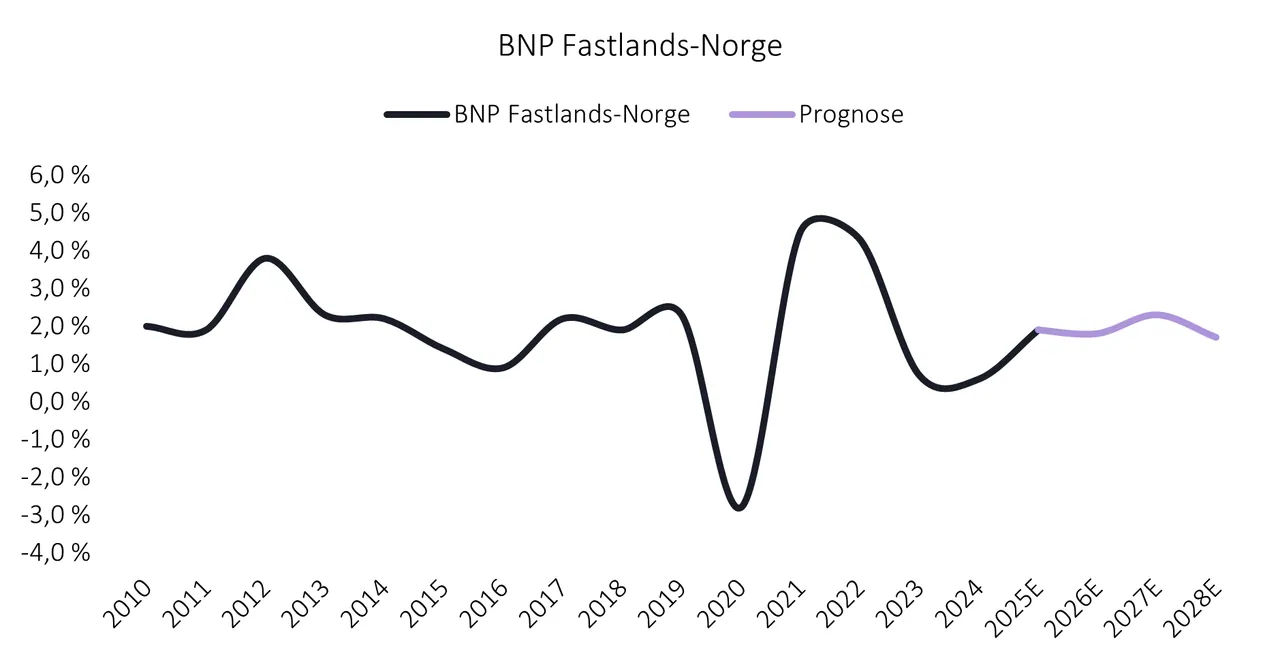
After a period of weak development, the Norwegian economy is once again showing clear signs of growth. Growth picked up in the first half of the year and has been stronger than expected. A lower policy rate, increased private consumption and high public demand are regarded as important drivers, together with high activity in the petroleum industry and export growth. Employment remains at a high level, while unemployment has risen slightly during the year.
Consumer price index
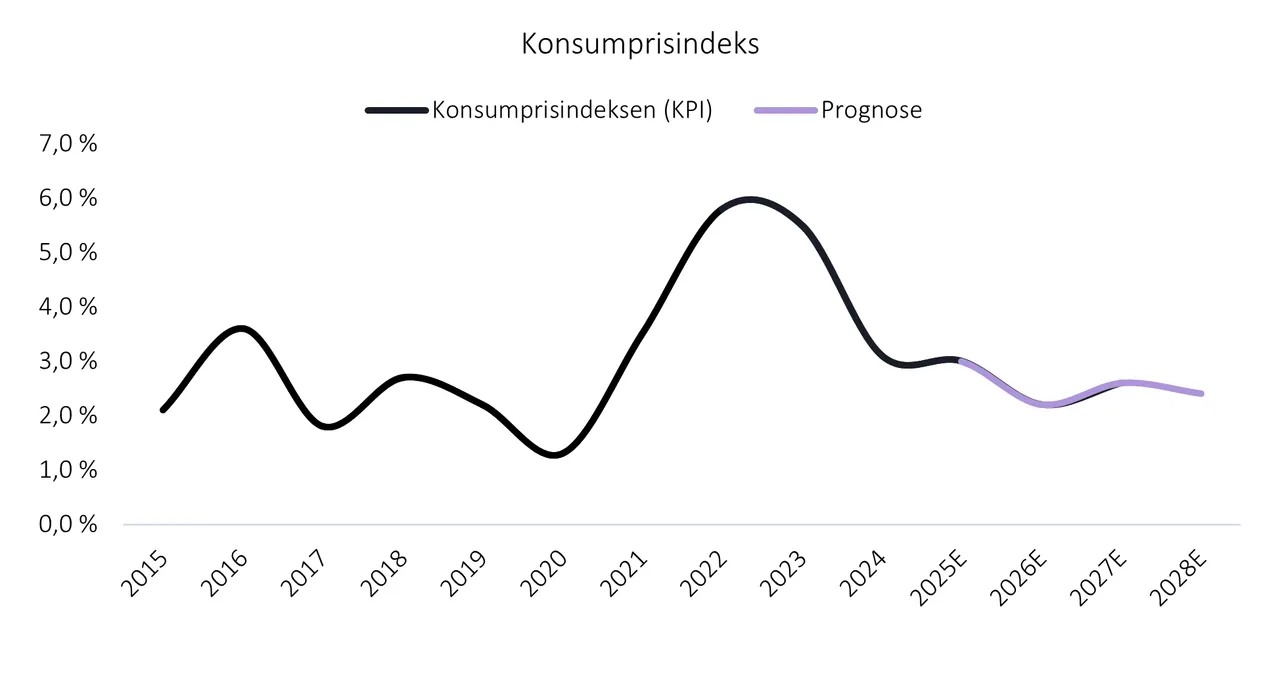
Inflation as measured by the CPI was historically high in 2022 and 2023, but fell markedly to 3.1 per cent in 2024. Inflation remains high and is expected to stay above the 2 per cent inflation target in 2025. In August, twelve-month growth was 3.5 per cent, while CPI-ATE stood at 3.1 per cent, down from 3.7 per cent the year before. Inflation is being driven up partly by higher food and energy prices.
Several factors will help pull inflation down going forward. Reduced kindergarten fees from August, a lower electricity tax and the introduction of Norgespris are helping to dampen the CPI. In addition, the price impulses from abroad that accelerated after the pandemic are now considerably weaker. Furthermore, energy prices rose sharply in October and November 2024, which is likely to create inflationary pressure in the coming months. In the opposite direction, domestic factors, including high wage growth and higher prices for Norwegian-produced goods and services, are driving inflation up. Overall, inflation is expected to decline gradually over the next few years.
The labour market
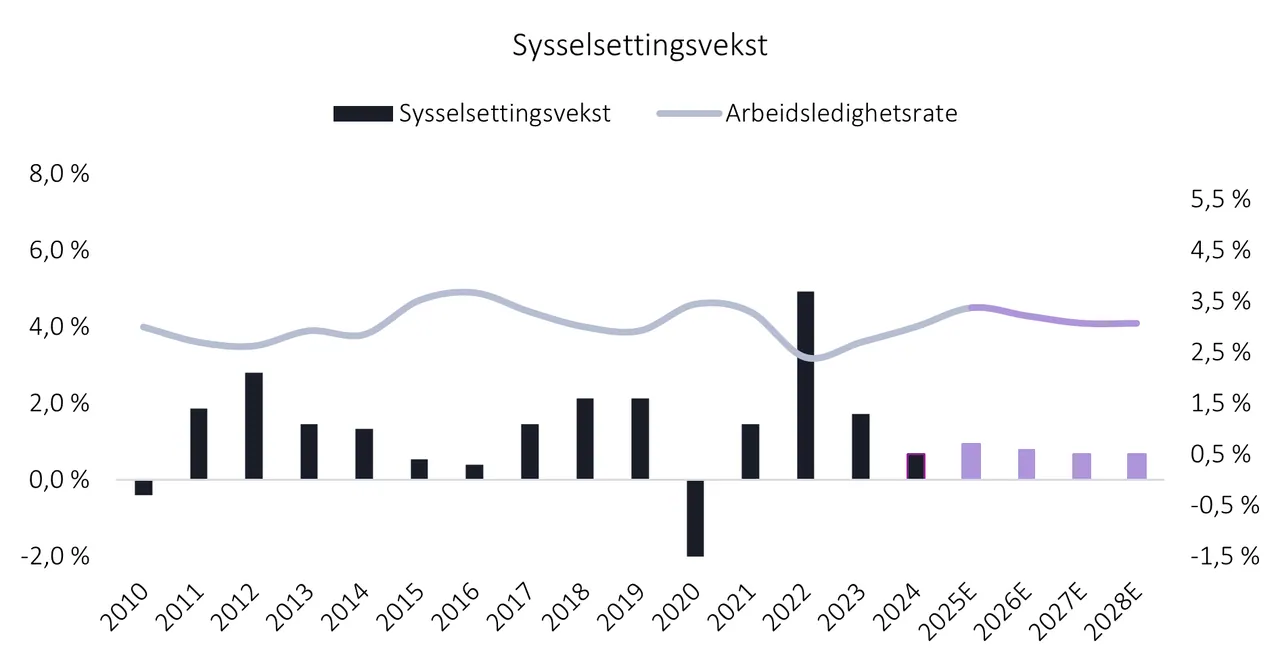
Average accrued annual earnings rose by 5.6 per cent in nominal terms from 2023 to 2024, giving real wage growth of 2.4 per cent – the highest real wage growth since 2012. Nominal wage growth is estimated at 4.7 per cent in 2025 and is then expected to decline gradually to around 3.5 per cent in 2028. Even with lower nominal wage growth, positive real wage growth is expected in the coming years.
Demand for labour is rising, but gradually slowing. In 2025, unemployment (LFS) is estimated to rise to around 4.5 per cent. NAV's figures show an increase through the summer, but suggest that the situation is in the process of stabilising. At the end of August, the wholly unemployed accounted for 2.1 per cent of the labour force. Including the partially unemployed and people on labour market schemes, jobseekers accounted for a total of 3.2 per cent.
The interest rate market
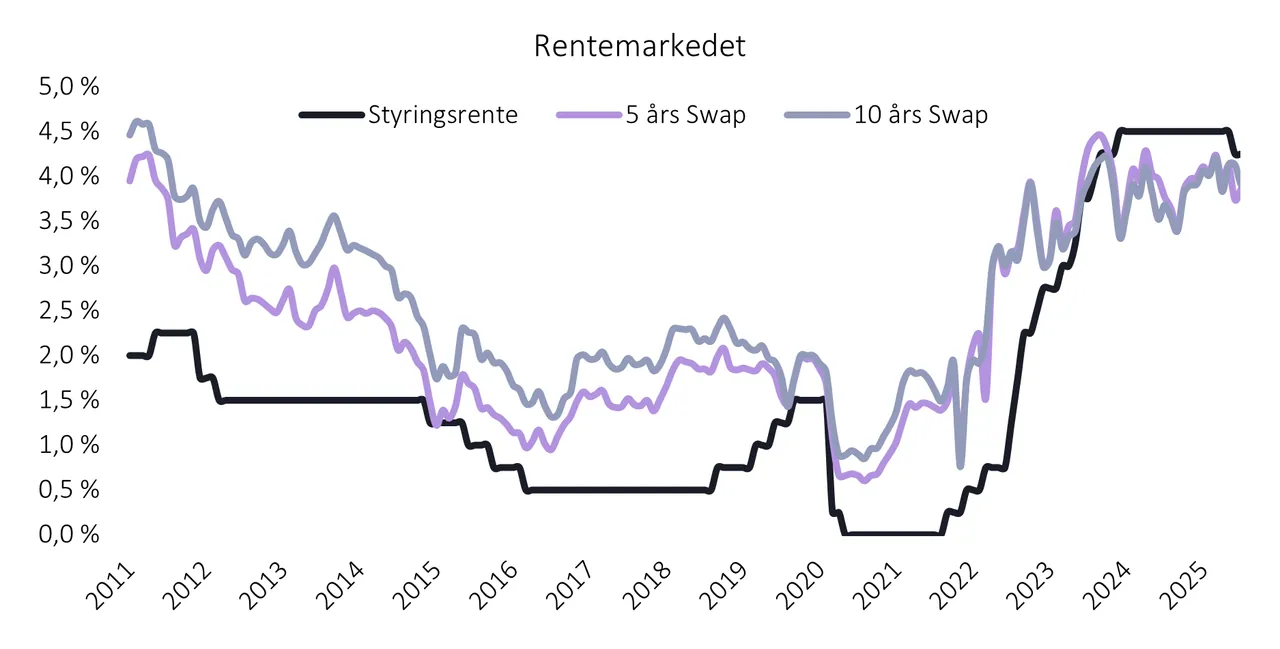
Long-term rates have stabilised, with a five-year swap rate of around 4 per cent. The market is cautious, and further developments will depend largely on the inflation path and international interest rate impulses.
After Norges Bank surprisingly lowered the policy rate to 4.25 per cent in June for the first time in five years, it was reduced by a further 25 bps to 4.0 per cent in September. The rate path was, however, revised upwards, and there is now greater uncertainty as to whether further rate cuts can be expected over the next year. The market is pricing in the possibility of a rate cut in December.